
Cretex Medical | QTS Featured in BONEZONE MAGAZINE
Matthew Homuth, Sr. Validation Engineer at Cretex Medical | QTS, was recently interviewed about cleaning validation for BONEZONE Magazine.
by Dan Cook | June 24, 2026
In the interview, Matthew discusses how to organize cleaning families, choosing a worst-case specimen, and how to include cleaning considerations in Design for Manufacturing (DFM).
Cleaning Families and Worst-Cast Scenarios
Organizing devices or components into cleaning families and validating a representative worst-case specimen from that family can streamline the cleaning validation process. “A cleaning family should share the same or very similar manufacturing sequences, including contact materials,” said Matthew. “By doing so, the challenge to the cleaning process is normalized, and the potential for outliers is greatly reduced.” Choosing the right worst-case specimen is critical for ensuring the validation of the whole family. A chosen device should have these attributes:
-
Surface Area: The largest device in a cleaning family typically has the most potential to carry the highest residue load.
-
Cleanability: Challenging features like deep blind holes, threading, and cannulations where fluid exchange is restricted will impact cleaning.
-
Surface Finish: Rougher surfaces or porous coatings trap more residues than smooth surfaces, which can impact cleaning capability.
-
Coatings, such as Hydroxyapatite (HA) and antimicrobials, require careful consideration during the cleaning process development. These materials can interact with the cleaning agents and impact the intended use of the device. As a result, the worst-case device might need to be challenged before the coating is added. The extraction process used during testing should also be evaluated to ensure there is no interference from the coating.
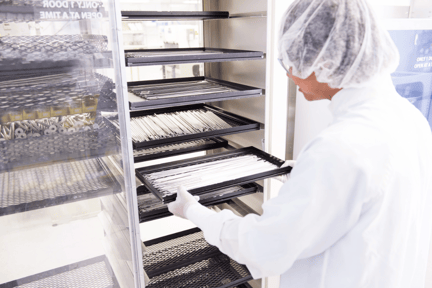
In some cases, when no single device in the family has all these attributes, a simulated device can be used. “The simulated device should be of equal or greater challenge to the process than any of the components in the cleaning family,” Homuth said. “Remember, omission of some manufacturing processes — anodizing and electropolishing — should be considered to maximize the potential residue load.”
Design for Manufacturing
Homuth discussed the importance of considering the cleaning modalities and capabilities when designing the manufacturing process. He identified some factors to consider:
- It may not be feasible to consistently clean (or clean at all) a device that consists of assembled components. A component permanently fixed within another component or press fit mated surfaces present inherent challenges.
- Mechanical agitation during cleaning can impact assemblies. For example, set screws may loosen or even be removed under ultrasonic agitation.
- Coatings may need to be applied after the final cleaning process. In these cases, the coating process needs to be performed in a controlled environment to prevent contamination. Also, testing may be needed on the uncoated and coated device if a partial coating is used.
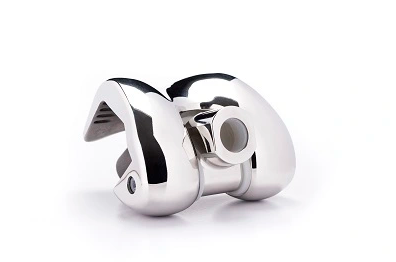
Matthew also pointed out the need for detergents to reach and be rinsed from all surfaces. “Detergents have low surface tension, so allow for adequate space to ensure the effectiveness of the cleaning and rinsing process.”
Matthew is one of many experts at QTS who help our customers find the right solutions for cleaning, sterilization, packaging, kitting, supply chain management, project management, and more. We're here to ensure efficiency, quality, and value as we help make it easier for customers to get their products to patients.
You can read the full article in BONEZONE Magazine.
Please visit the Cretex Medical | QTS’s Services Page for more information about our range of capabilities.
.png)
.png)